Can microplastics help us understand the long-term impacts of human activities on marine ecosystems? The MemoBaltic project, funded through the second AQUARIUS Transnational Access Funding Call, is exploring this question by introducing the novel concept of microplastics as “living archives” that preserve evidence of environmental change over time.
The project investigates how microplastics can store information on human impacts from the water column to marine sediments. The project investigated resting stages of plankton accumulated in sediments and their importance for future food-web dynamics and ecosystem functioning under a changing climate.
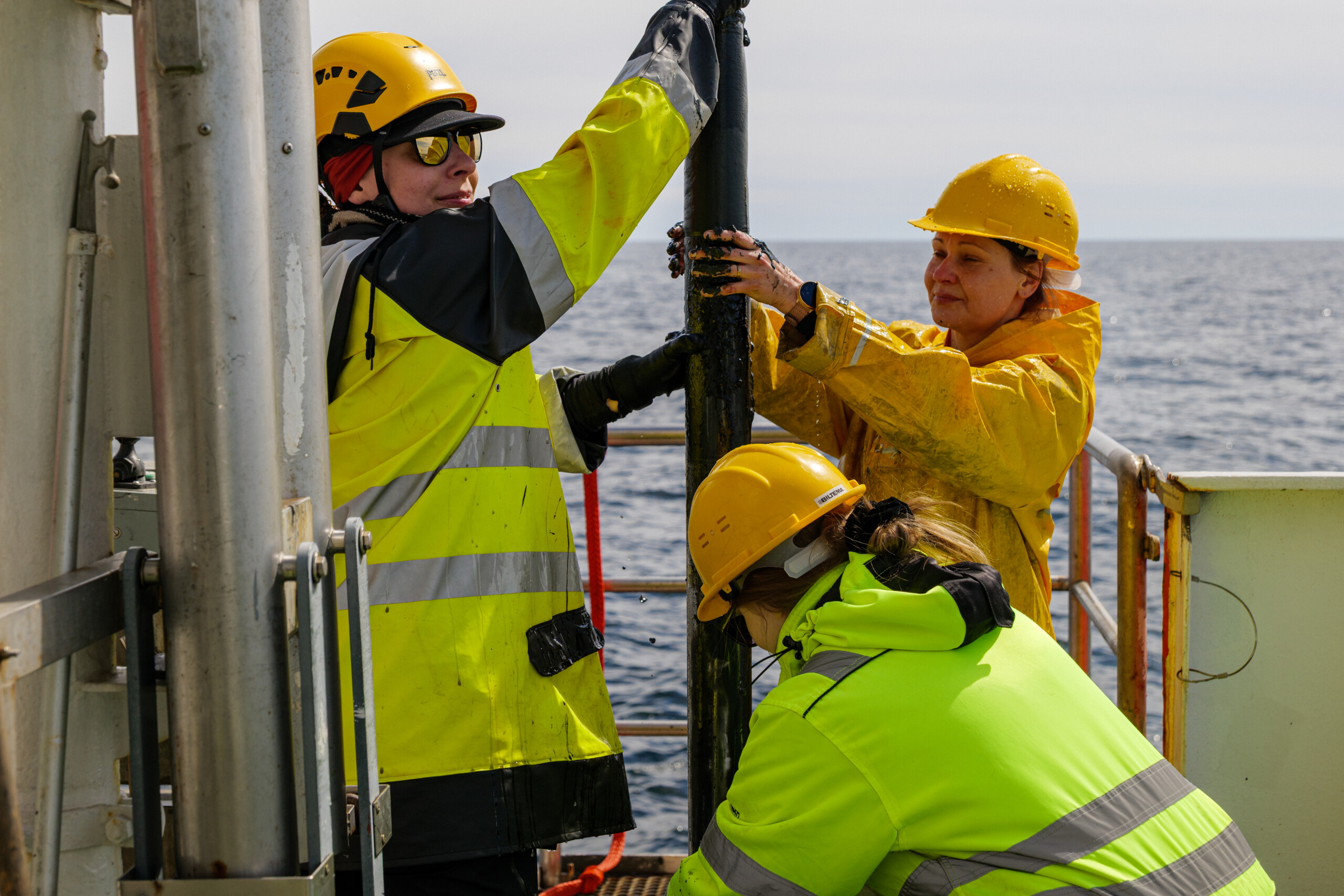
Through AQUARIUS, MemoBaltic was funded to access the Finnish Environment Institute Syke’s research vessel Aranda. Between 4 and 15 May 2026, the research team carried out an expedition across the Gulf of Riga, the Latvian Exclusive Economic Zone in the Baltic Proper, and the entrance to the Gulf of Finland.
During the expedition, researchers sampled 17 stations for a wide range of analyses, including microplastic extraction, microscopy, environmental DNA (eDNA), FTIR/LDIR polymer analysis, SCP and tephra dating, other dating analyses, and contaminant analysis. Baltic Proper, and the entrance to the Gulf of Finland.

The project, The Study of Living Archives and Ecosystem Memory in the Baltic Sea (MemoBaltic), is coordinated by the Latvian Institute of Aquatic Ecology, in partnership with the Institute of Food Safety, Animal Health and Environment BIOR, Tallinn University of Technology, the Finnish Environment Institute Syke, Latvijas Universitāte, and the University of Turku.
The project’s findings will strengthen the scientific basis for sustainable marine management and support regional and international efforts to better understand, protect and restore the Baltic Sea.

Status update of Call 2
The scientific evaluation phase of the second AQUARIUS Transnational Access Funding Call has now been completed. Of the 37 eligible proposals, 25 have been recommended for funding. These proposals are currently undergoing logistical evaluation according to their scientific ranking and within the available budget.
Due to the timing of some research activities and their high scientific ranking, several successful projects, including MemoBaltic, have already begun their fieldwork. The AQUARIUS team will contact all applicants as soon as their logistical assessment has been completed.