

This article is adapted from an original news story published by the Swedish University of Agricultural Sciences (SLU).
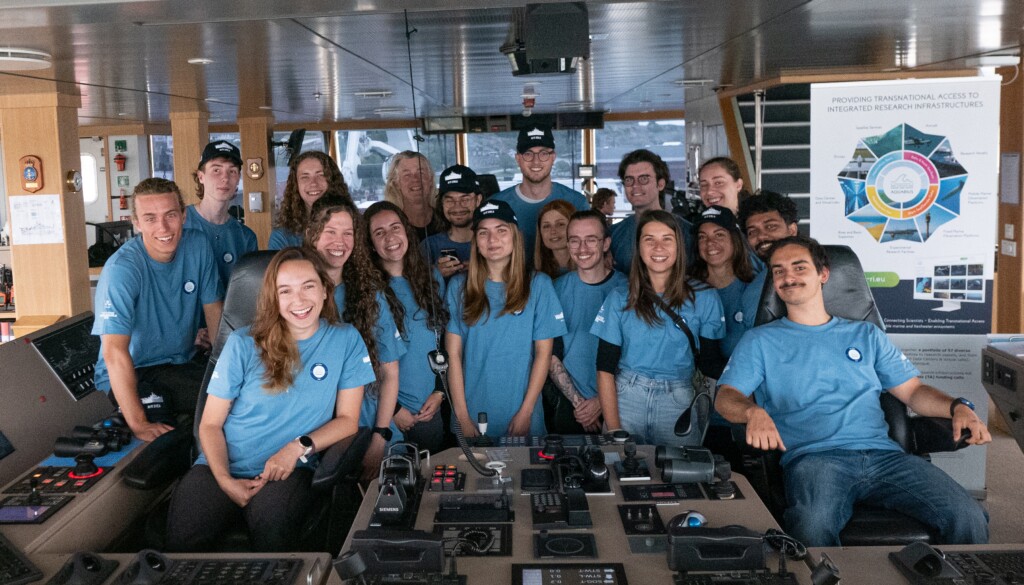
For one week this summer, the Swedish research vessel RV SVEA became a floating university as master’s and PhD students from across Europe took part in this AQUARIUS funded training opportunity, organised by the Swedish University of Agricultural Sciences (SLU).
The hands-on training programme gave participants the opportunity to experience every stage of a marine research expedition, from planning the survey and designing the sampling strategy to collecting and analysing data at sea.
This unique experience offered students the opportunity to develop the cruise plan themselves. Working alongside experienced researchers and the vessel’s crew, they selected sampling locations, planned the itinerary and adapted their survey as the expedition progressed, gaining first-hand experience of the scientific and logistical decisions behind marine research.
Throughout the week, participants learned how non-invasive techniques are used to monitor marine ecosystems while minimising disturbance to marine life and habitats.
One of the main methods introduced was hydroacoustics, which uses sound waves to detect fish beneath the vessel. By analysing the returning echoes, scientists can estimate fish abundance, locate schools of fish and even distinguish between species without catching them. Participants also used underwater video systems (UWTV) to observe marine habitats and species on the seafloor, and collected sediment grab samples to study seabed habitats and the animals living within them.
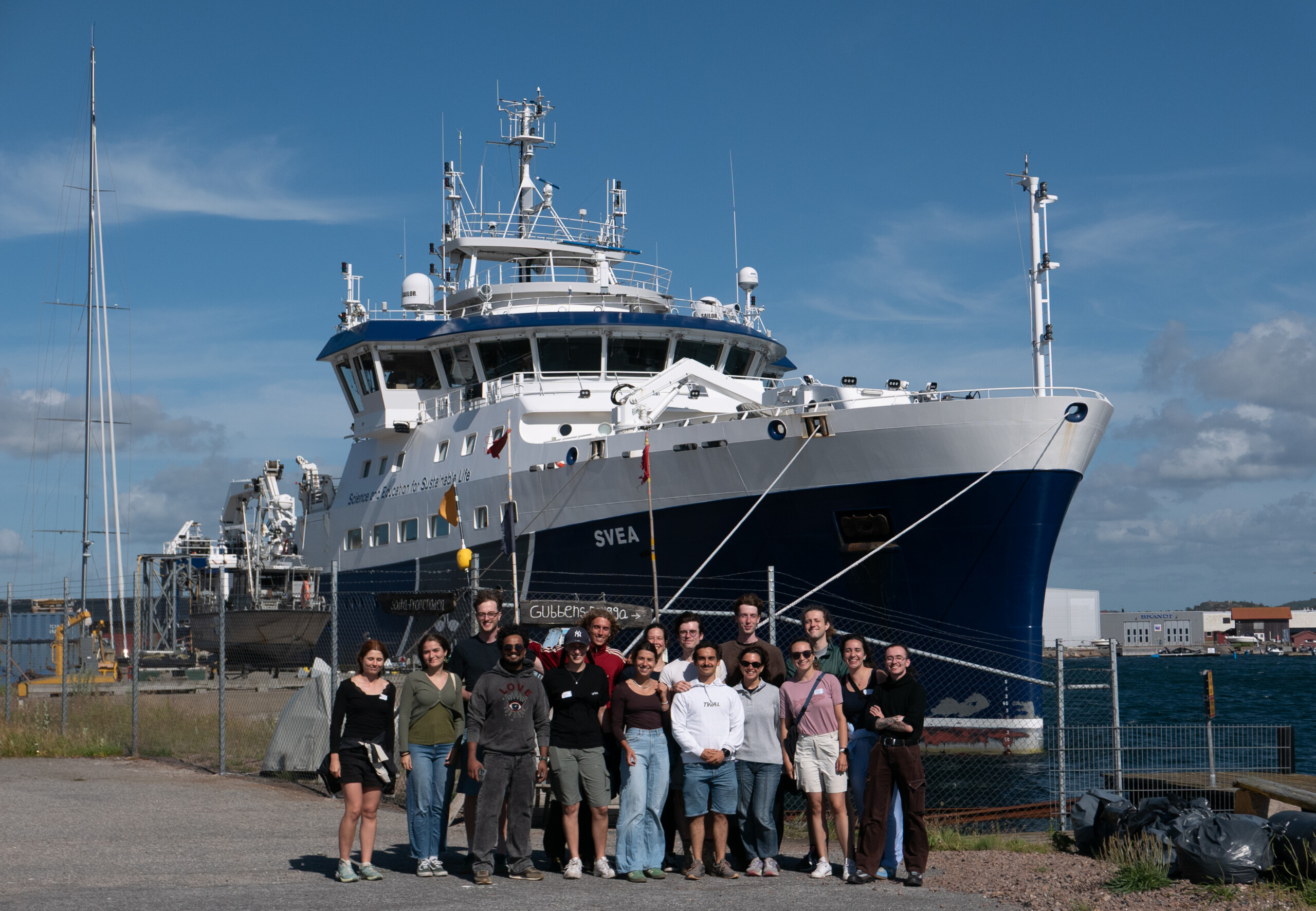
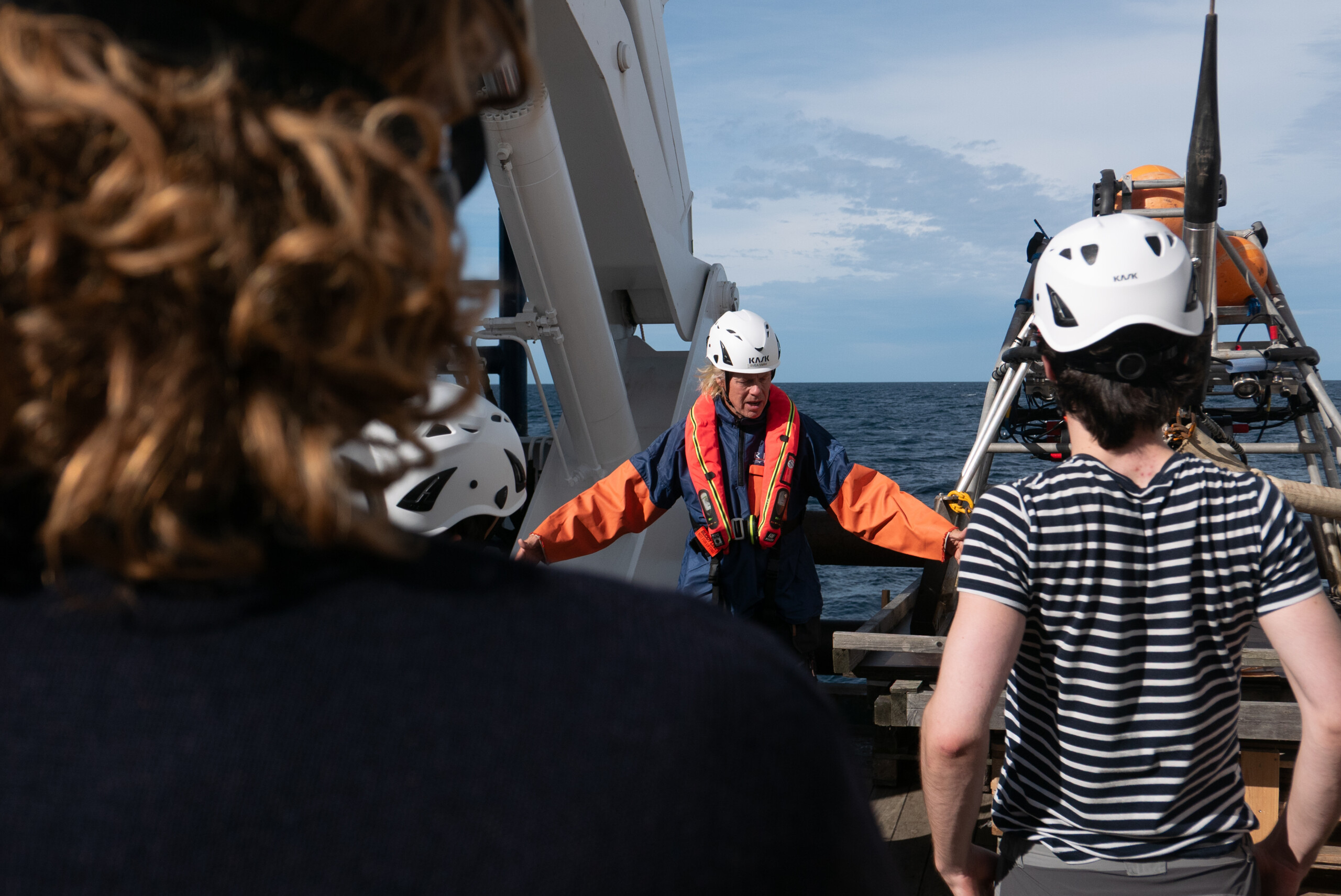
Together, these complementary techniques help scientists build a more complete understanding of marine ecosystems and support ecosystem-based fisheries management and long-term environmental monitoring.
The surveys were carried out in the Bratten Marine Protected Area, where participants gained practical experience using scientific equipment, analysing underwater imagery with the VIAME platform and integrating different types of environmental data to assess marine biodiversity.
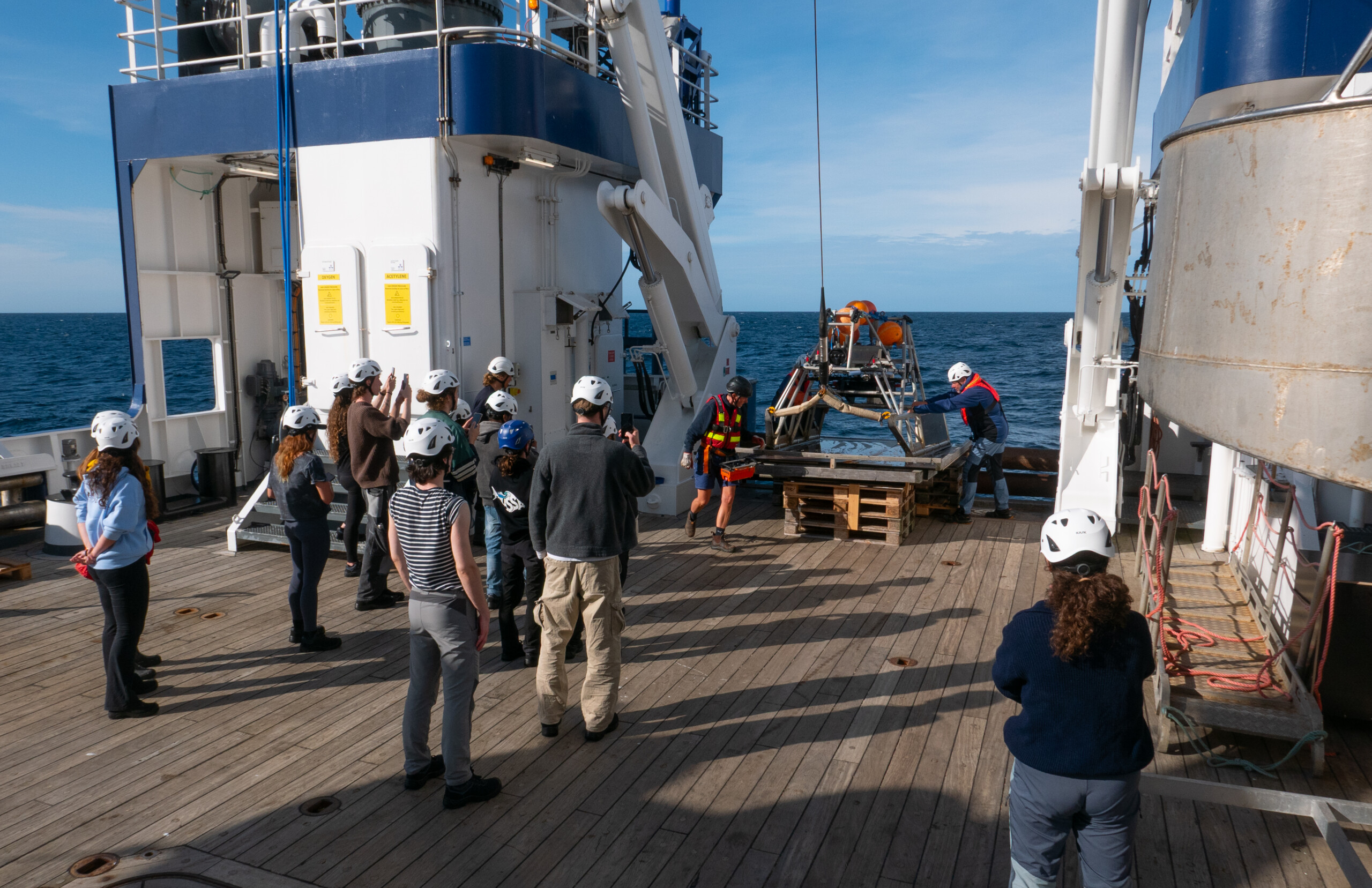
Beyond learning new scientific methods, the programme provided valuable experience in collaboration, expedition planning and teamwork. Participants worked closely with researchers Jonas Hentati-Sundberg, Mattias Sköld and Hans C. Nilsson, as well as the crew of RV SVEA, while building connections with fellow early-career scientists from across Europe.
Funded through AQUARIUS, the Floating University demonstrates how access to Europe’s world-class research infrastructures can help train the next generation of marine scientists. By combining advanced technology with practical experience at sea, the programme equips participants with the technical skills, field experience and international networks needed to support future marine research and sustainable ocean management.