In this Edition
- A Word from Our Coordinator
- News from the AQUARIUS Funded Projects
- AQUARIUS Training Opportunities
- Delivering FAIR Data
- Dates for your Diaries
AQUARIUS is a Horizon Europe-funded project with the aim to provide access to a comprehensive and diverse suite of integrated research infrastructures to address challenges and explore opportunities for the long-term sustainability of our marine and freshwater ecosystems.
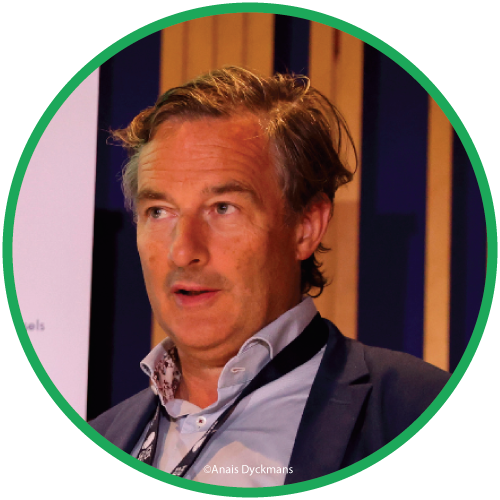
A Word from our Coordinator, Aodhán Fitzgerald
It has been fantastic to see so much AQUARIUS-funded research taking place. Projects including GREAT, AR7E-2026, E(ddies)GC, Hydro-MED, q-fDOM, SCANDSKAGEX26 and MemoBaltic are strong examples of what AQUARIUS was established to achieve: bringing together international expertise and world-class research infrastructures to help address the pressing challenges we face today in our aquatic ecosystems.
As you will see below, some projects have also found unexpected opportunities for collaboration along the way, demonstrating how transnational access to research infrastructures can create connections that extend beyond the original scope of a project.
Beyond supporting this transnational access, supporting early career researchers remains an important part of AQUARIUS. This summer, students from across Europe joined the AQUARIUS Floating University, gaining hands-on experience across the different stages of a marine research expedition.
And coming up in October, AQUARIUS will support two students to attend the PLOCAN Glider School, a reference training school in marine glider technology organised annually by the Oceanic Platform of the Canary Islands (PLOCAN).
As these activities continue, they demonstrate the strength of Europe’s marine and freshwater research community and the value of sharing access to infrastructures, expertise and knowledge across borders. We look forward to seeing more AQUARIUS-funded projects take place in the coming months and to following the research, collaborations and new opportunities they enable.
I invite you to discover these stories and more in this edition of the AQUARIUS newsletter.

A first for the UN High Seas Treaty: The first pre-collection notification submitted ahead of the AQUARIUS-funded AR7E-2026 expedition
Led by Dr Yvonne Firing of the National Oceanography Centre (NOC), the AQUARIUS-funded AR7E-2026 project conducted an international research expedition from Ireland to Greenland aboard the RV Celtic Explorer.
Alongside advancing our understanding of the changing North Atlantic, the expedition has become part of an important milestone in international ocean governance: it is the subject of the first pre-collection notification for marine genetic resources submitted under the UN Agreement on Biodiversity Beyond National Jurisdiction (BBNJ Agreement).
MemoBaltic: Investigating Ecosystem Memory in the Baltic Sea
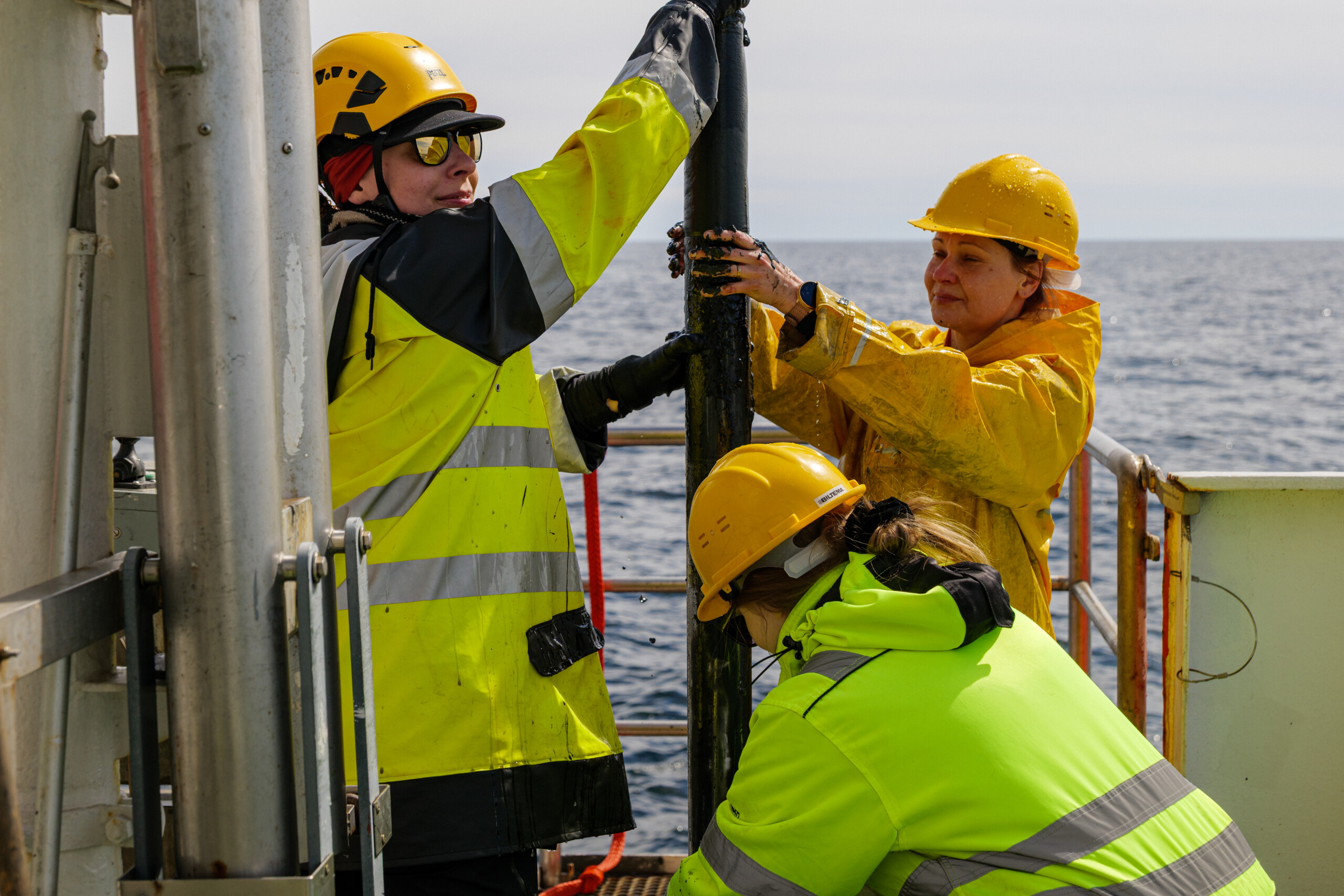
Can microplastics help us understand the long-term impacts of human activities on marine ecosystems? The MemoBaltic project, funded through the second AQUARIUS Transnational Access Funding Call, is exploring this question by introducing the novel concept of microplastics as “living archives” that preserve evidence of environmental change over time.
Led by Dr. Anda Ikauniece of the Latvian Institute of Aquatic Ecology the project carried out an expedition across the Gulf of Riga, the Latvian Exclusive Economic Zone in the Baltic Proper, and the entrance to the Gulf of Finland. During the expedition, researchers sampled 17 stations for a wide range of analyses.
GREAT expedition successfully completes Arctic research mission aboard RV Celtic Explorer
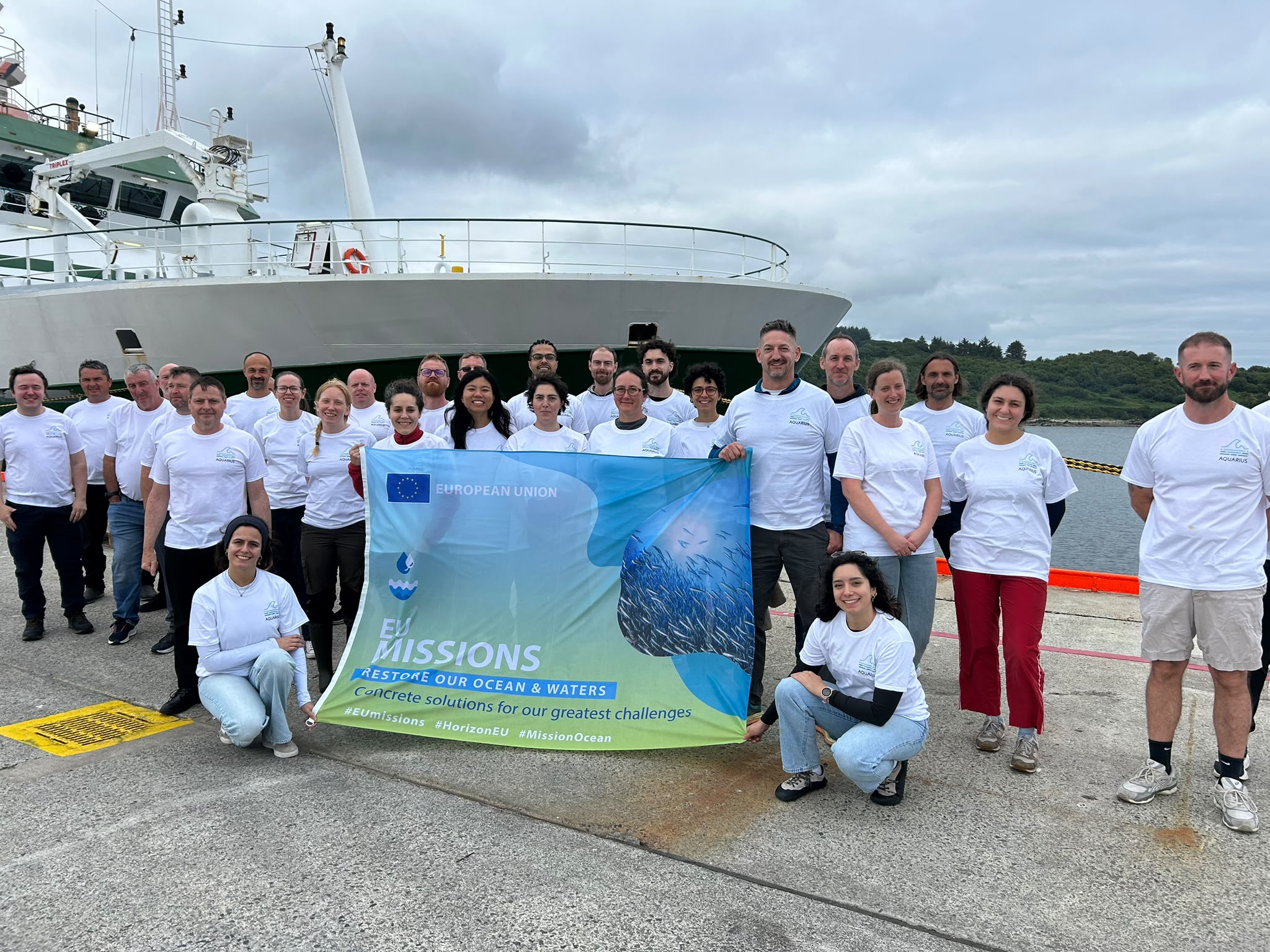
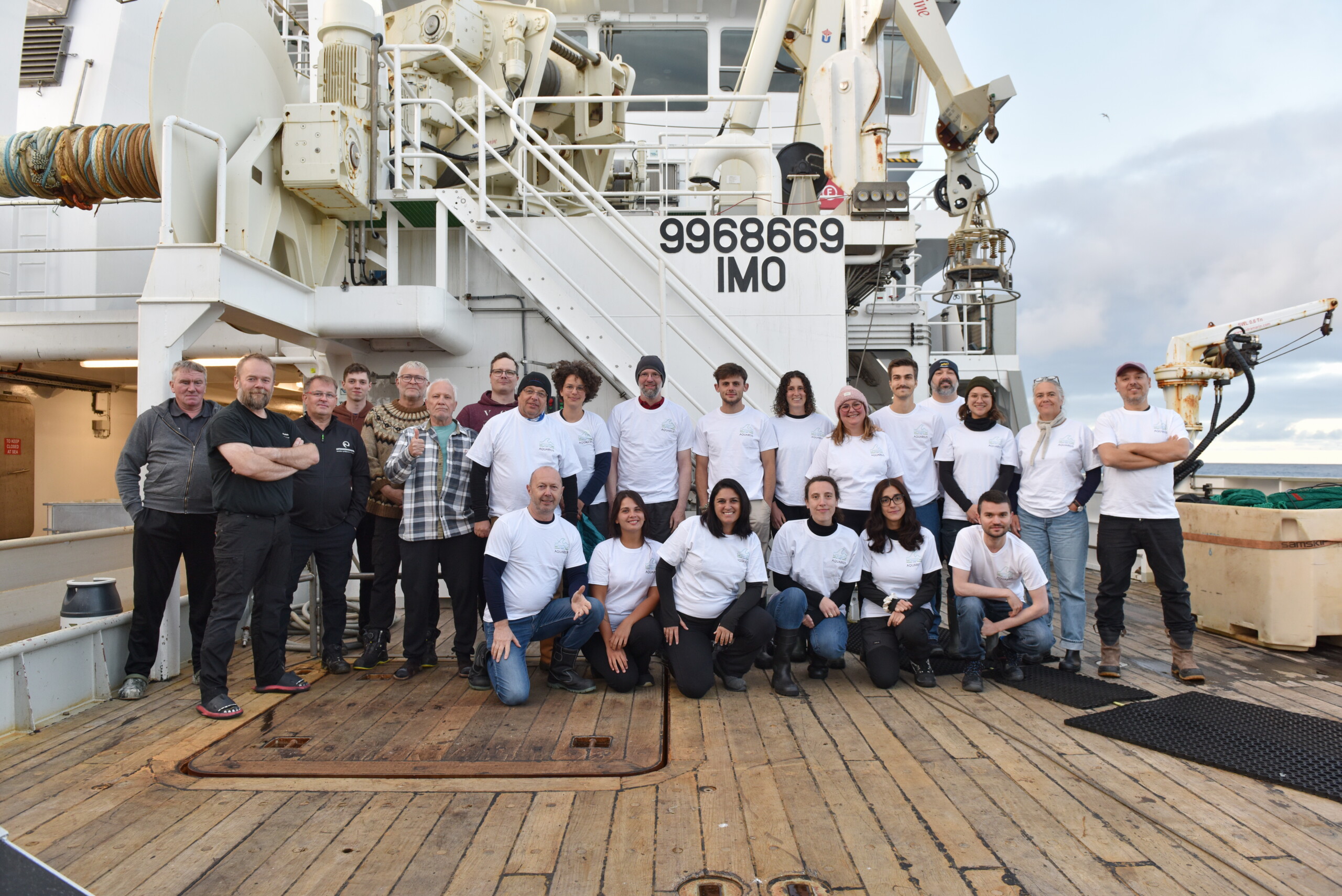
An international team of scientists has successfully completed the ‘GREAT’ (Greenland Spreading Zone: Exploring Extreme Habitats in Arctic Seamounts and Hydrothermal Vents) research expedition aboard Ireland’s national research vessel, the RV Celtic Explorer, following 18 days of operations in the Arctic Circle.
Led by Dr Diana Krawczyk from the Greenland Institute of Natural Resources, the GREAT project brought together researchers from across Europe to investigate the Arctic marine environment, using advanced scientific equipment and expertise to support a greater understanding of this remote and changing region.
E(ddies)GC: new collaborations in the East Greenland current
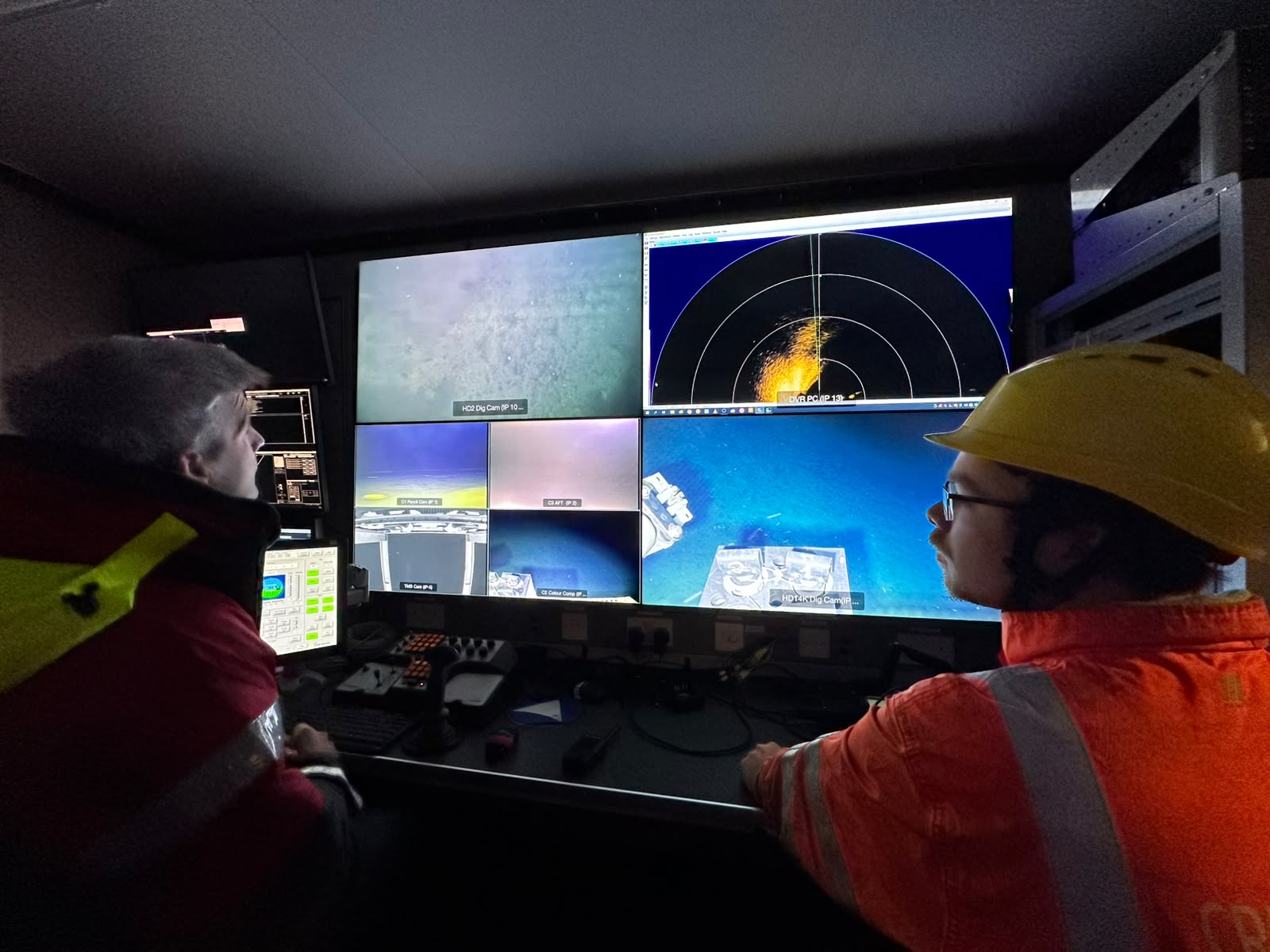
After 10 days at sea, the international E(ddies)GC team completed its research expedition in the waters off East Greenland. Led by the Flanders Marine Institute (VLIZ), the E(ddies)GC project received funded access to the new state-of-the-art Icelandic research vessel RV Þórunn Þórðardóttir through the first AQUARIUS Transnational Access Call.
Alongside its scientific objectives, the expedition also became part of an unexpected exchange between two international research teams, demonstrating how Transnational Access projects can start new collaborations and generate outcomes beyond the scope of the original project.

AQUARIUS Floating University: Training the next generation of marine scientists aboard RV Svea
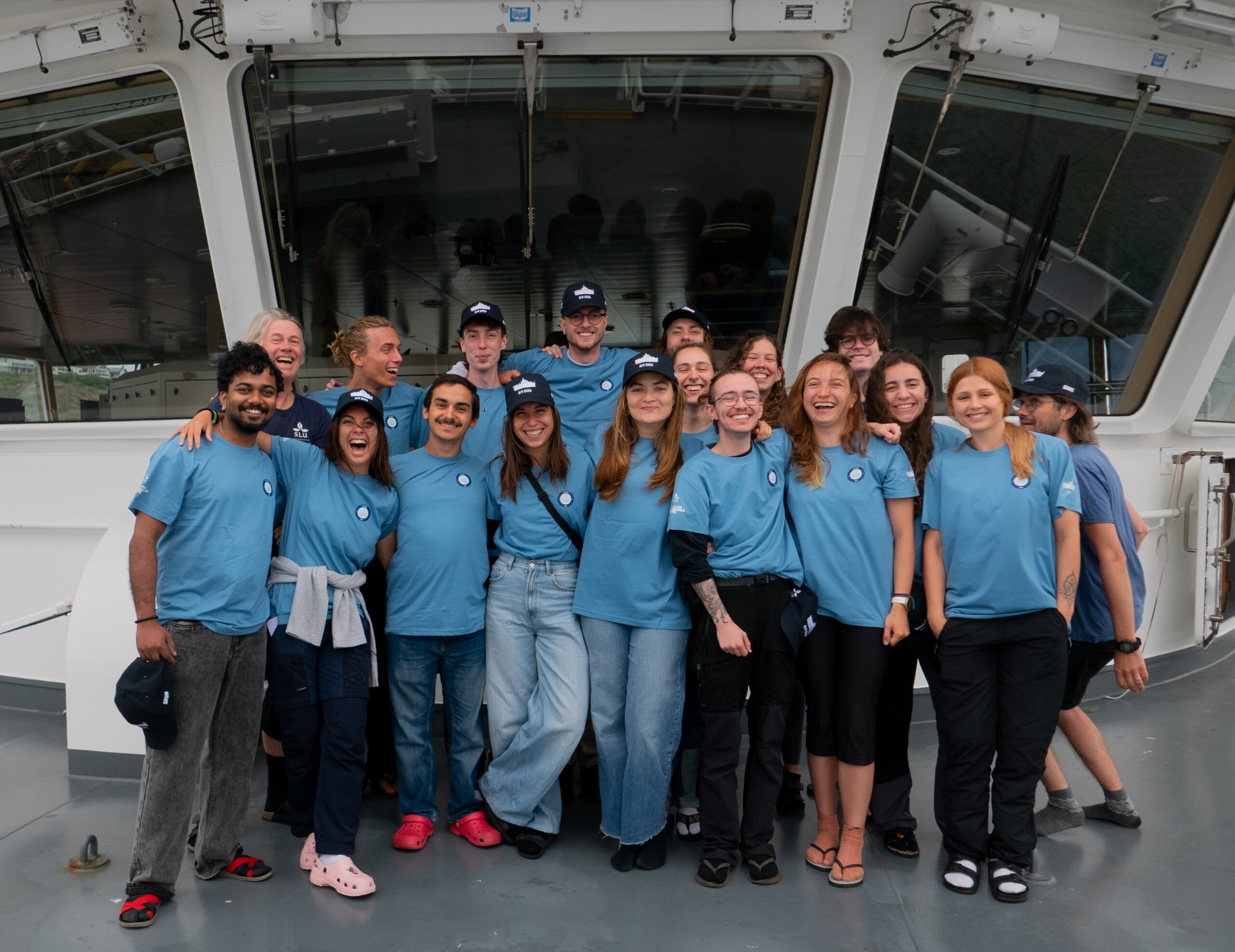
For one week this summer, the Swedish research vessel RV Svea became a floating university as masters and PhD students from across Europe took part in this AQUARIUS funded training opportunity, organised by the Swedish University of Agricultural Sciences (SLU).
The hands-on training programme gave participants the opportunity to experience every stage of a marine research expedition, from planning the survey and designing the sampling strategy to collecting and analysing data at sea.
A student’s perspective: Kris Kleve’s Floating University experience aboard RV Svea
What is it like to take part in a Floating University?
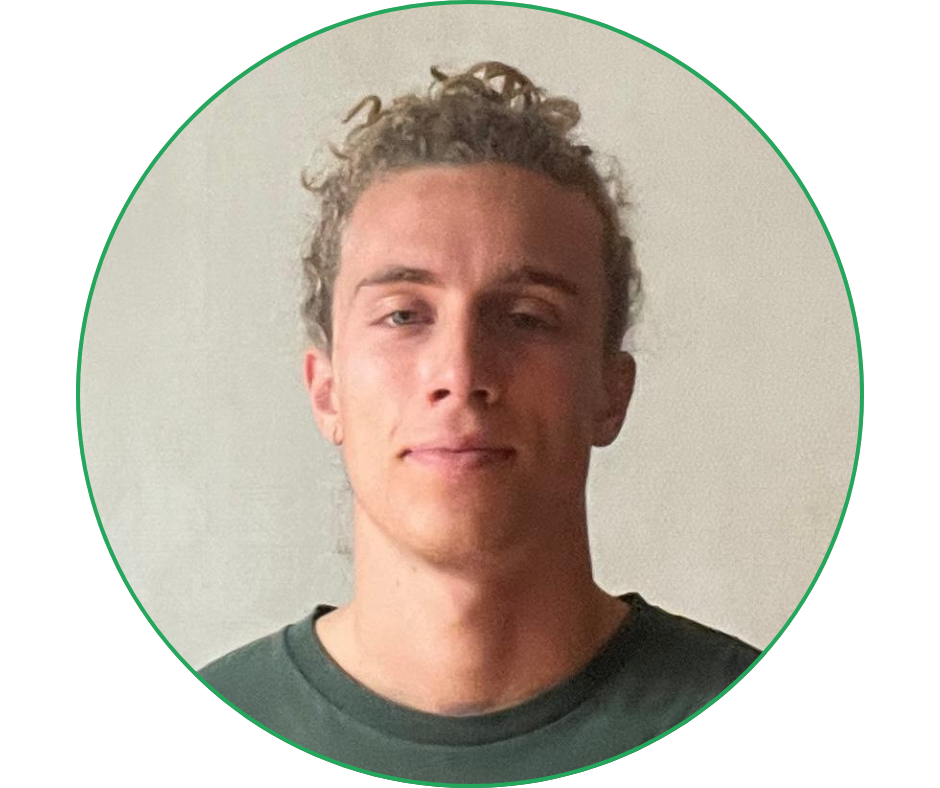
Read our new blog, where Kris Kleve, a Marine Science Masters student at Sorbonne University, shares his experience taking part in a Floating University organised by the Swedish University of Agricultural Sciences (SLU) aboard the research vessel Svea.
Discover what he learned along the way and why Kris describes the experience as “one of the most fabulous weeks of his life”.

You can find out more about the funded projects and follow their data collection efforts through the AQUARIUS Dataflow Dashboard, with the ASTRA project being the first to have their data flowing into European infrastructures, including EMODnet.
AQUARIUS is committed to an open data policy, implemented with a dedicated Data Management approach, to ensure that all gathered metadata and data are managed in line with the FAIR principles and ultimately feed into EMODnet, Copernicus Marine, and the European Digital Twin Ocean developments, supporting the OceanEye ambitions.
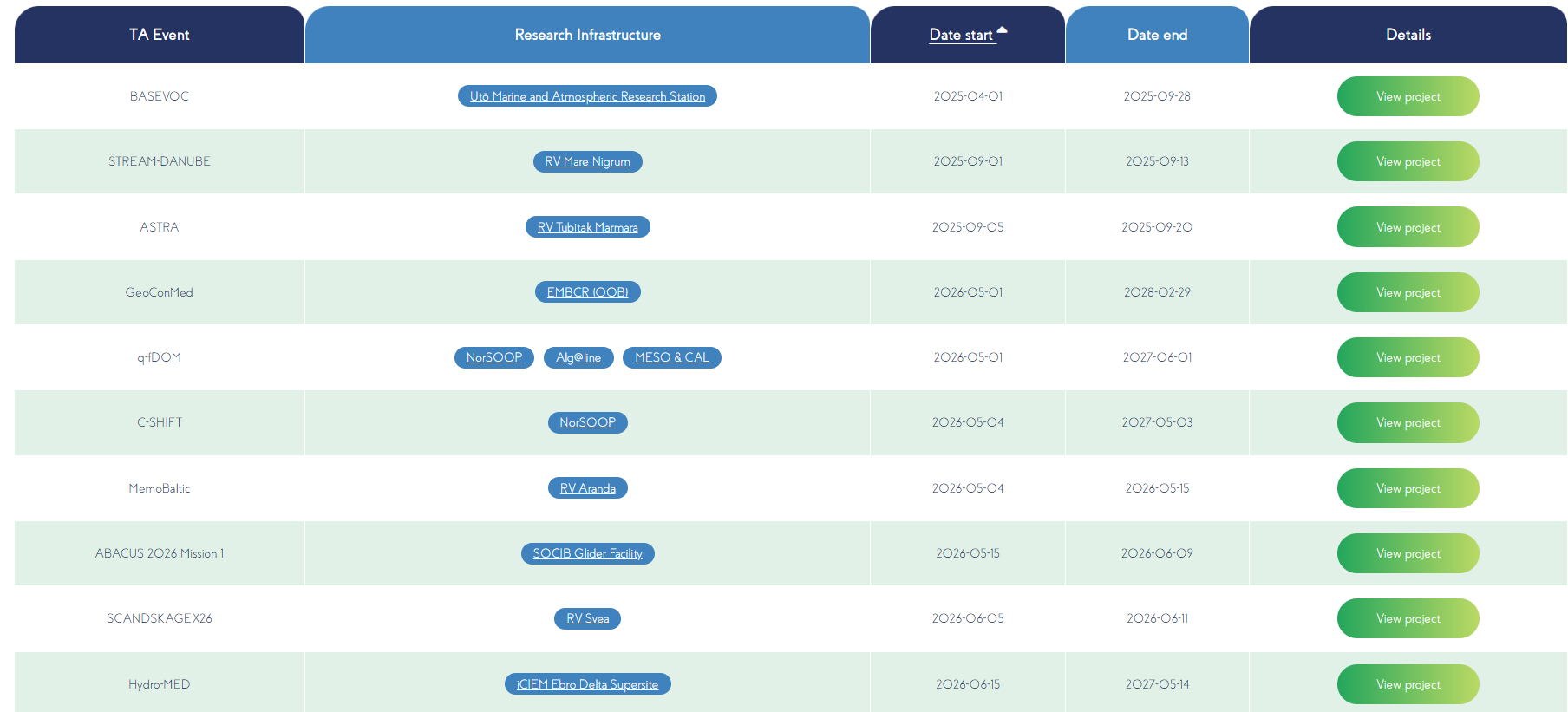

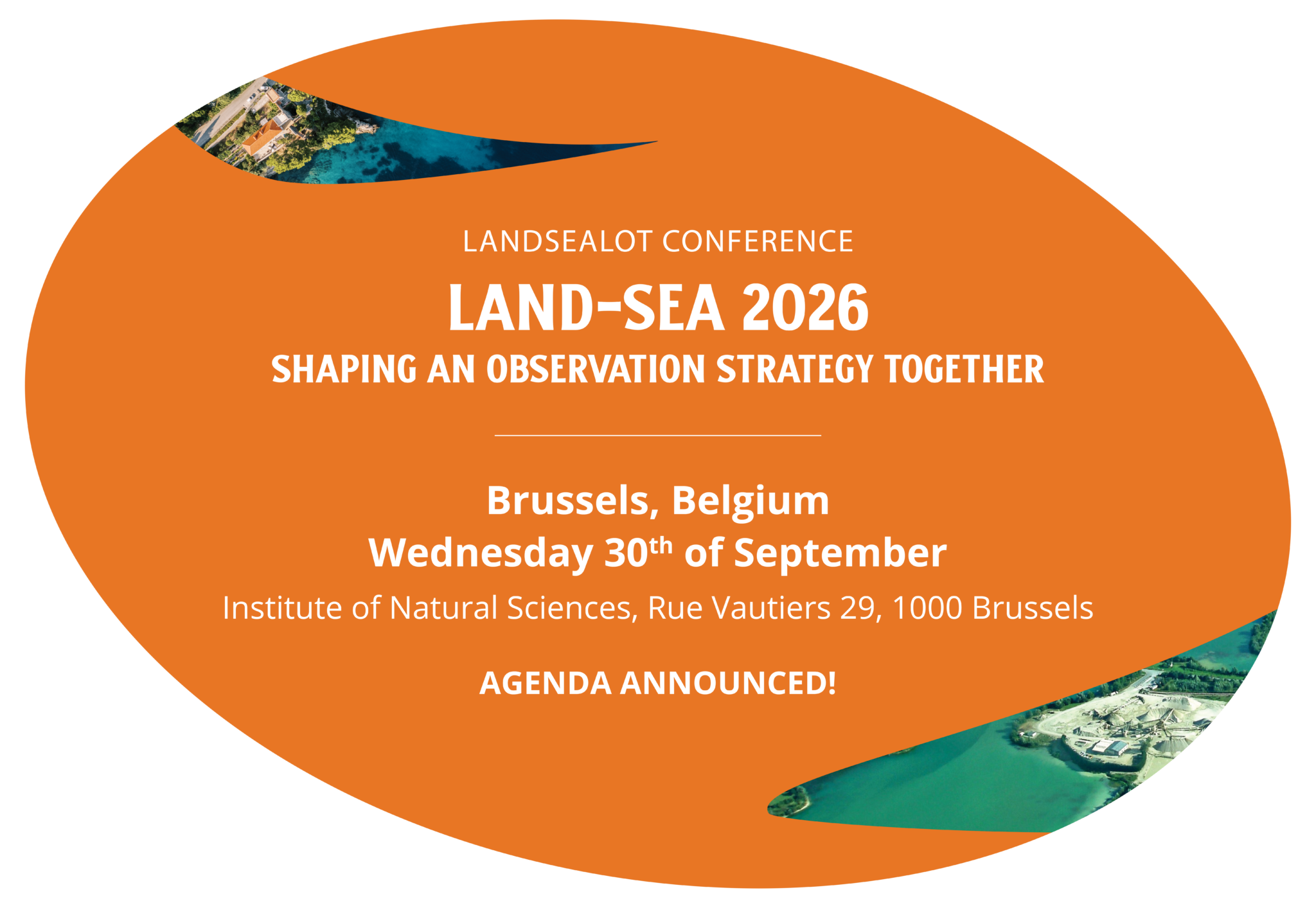
Would you like to learn more about AQUARIUS and speak with one of our representatives in person? Come and meet us at one of these upcoming events:
Land-Sea 2026
30 September 2026
Brussels, Belgium
Learn more
IMDIS 2026
1-3 December 2026
Split, Croatia
Learn more
ICRI 2026
2-4 December 2026
Rome, Italy
Learn more
Thank you for reading our first newsletter. If you have any comments of suggestion, please contact us at hello @aquarius-ri.eu.
If you have enjoyed learning about the AQUARIUS project, please help us spread the word and share the subscription link with your networks.