AQUARIUS Funding Call – Marine and Freshwater Infrastructure Access: Open 02 September 2025 – 28 October 2025
AQUARIUS Funding Call – Marine and Freshwater Infrastructure Access: Open 02 September 2025 – 28 October 2025
One management tool that can help protect and limit damage to marine ecosystems is the implementation of Marine Protected Areas (MPAs).



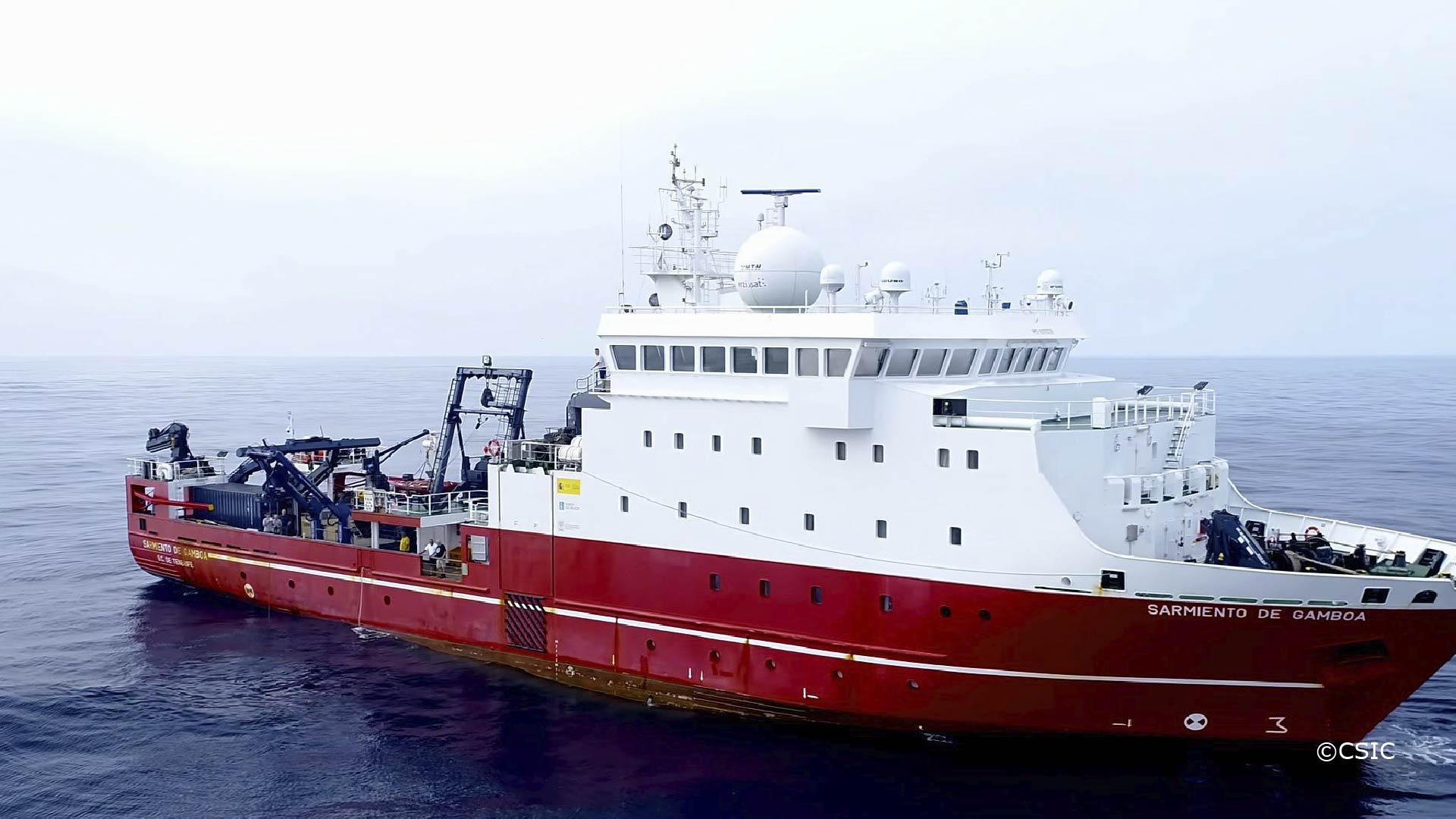


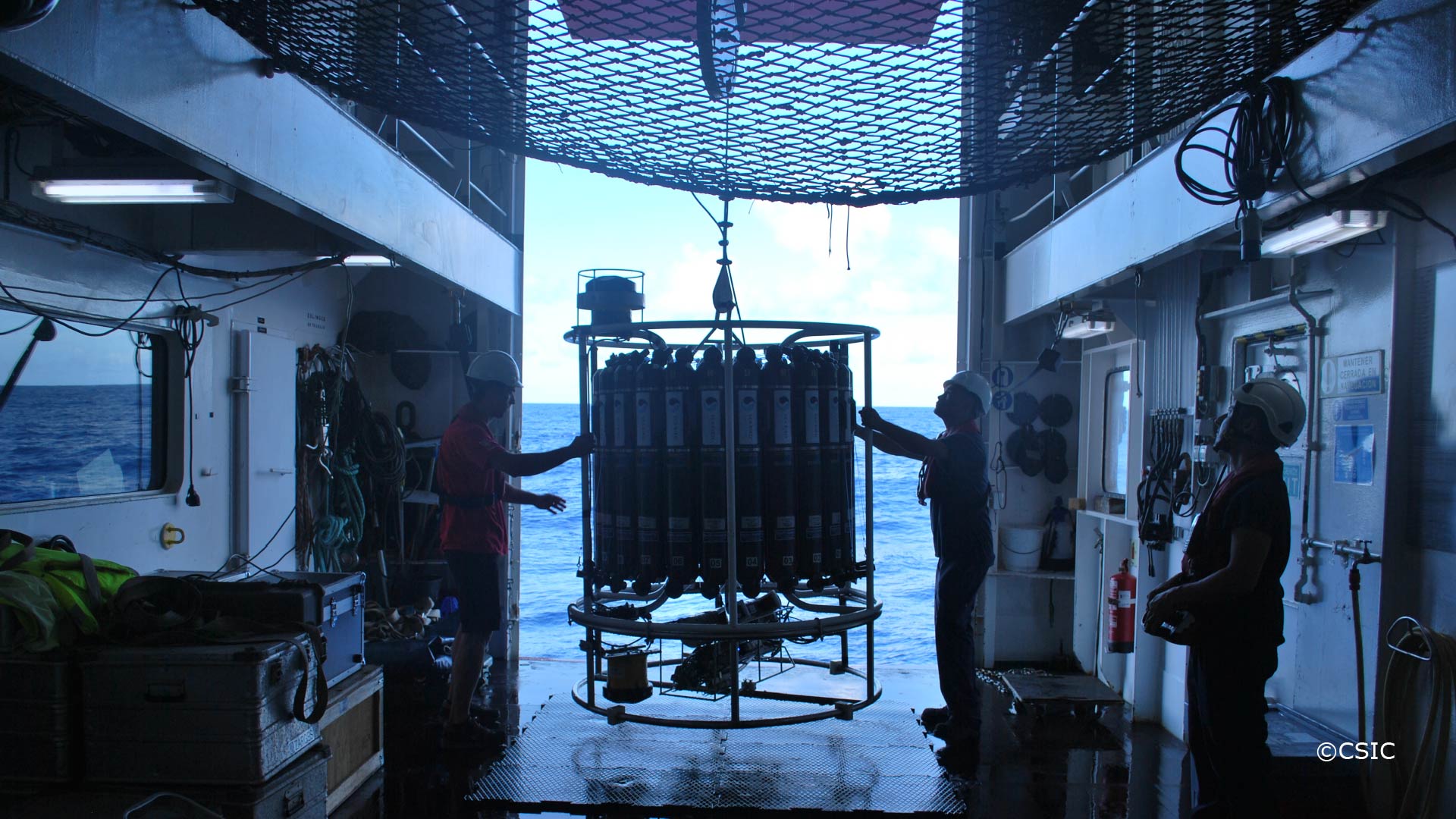


Research Infrastructure Used: RV Sarmiento de Gamboa
“The project funded by the Aquarius program is an excellent opportunity to study this poorly understood area and ecosystems of the NW Atlantic and will provide much needed information that will help us assess how effective the NACES MPA is in relation to protecting seamount and abyssal ecosystems of the NW Atlantic.”
Prof. Andrew K. Sweetman, Scottish Association for Marine Science

One management tool that can help protect and limit damage to marine ecosystems is the implementation of Marine Protected Areas (MPAs). OSPAR has designated several MPAs so far, however, it was not until 2021 that a new MPA in an Area Beyond National Jurisdiction (ABNJ) was designated. OSPAR’s twelfth and most recently established North Atlantic Current and Evlanov Sea basin (NACES) MPA was championed by BirdLife International and the Germany Federal Agency for Nature Conservation in collaboration with a large pool of experts that contributed their data via the Seabird Tracking Database. The NACES MPA was initially adopted to protect and conserve seabirds, and the ecosystems of the waters over the seabed including the biodiversity and processes that support seabirds. However, the NACES MPA was later expanded to protect other features including sea turtles, tuna, oceanic sharks, and cetaceans, but also habitats such as the Milne seamounts and cold-water corals, and ecosystem processes such as benthopelagic coupling (Henry et al., submitted).
While the designation of the NACES MPA is a welcome result and helps to safeguard the ecosystems found here, the fact that we know so little about it means we do not understand how effective the MPA is in protecting deep-sea environments. Moreover, we are presently unable to reliably predict the short, medium, and long-term impacts of current and emerging threats on the health and functioning of oceanic food webs in this area. As such, managers do not have the scientific foundations to assess the risks human activities pose, or which precautionary actions they have in their power to mitigate negative impacts. Our ultimate objective for this cruise is therefore to undertake the first deep ocean survey of the NACES MPA to census the biodiversity and ecosystem processes of the deep pelagic, seamounts, and abyssal plain ecosystems found here, and start to quantify the hydrography of the water column, biological carbon pump, and pelagic and benthic food-webs.
We will fully characterize the BCP and water column hydrography in the NACES MPA from multiple CTD casts over seamounts and abyssal plains, and by deploying two sediment trap moorings with current meters from the RV ‘Sarmiento de Gamboa’ for one year, which will allow us to begin to understand the Biological Carbon Pump in the area. These observations will be accompanied by shipboard experiments to document pelagic C-degradation, and dark inorganic C-fixation (an alternative C-input pathway). The sediment trap moorings will be recovered one year later during a follow-up research expedition with the RV ‘Celtic Explorer’.
We will also quantify the biodiversity, abundance, and feeding patterns of dominant organisms at meso- and bathy-pelagic depths (e.g., residing in the deep-scattering layer or DSL) to estimate the potential impacts of the release of predators (e.g., due to pelagic fisheries) that feed on fauna in the DSL.
We will also undertake seafloor respirometer lander deployments to quantify seafloor respiration, and rates of C-cycling by the benthos, as well as baited camera deployments to document the biodiversity and feeding activities of benthic and demersal scavengers. This information will be used together with seafloor image surveys carried out one-year later, which will allow us to document the flux of mesopelagic carrion (e.g., squid and jellyfish) to the seafloor to further parameterize the BCP.
MORE INFORMATION
AQUARIUS TA Project Name:
Understanding deep-sea ecosystem processes and creating a safe operating space for the NACES-MPA
Project acronym:
NACES-SOS
TA Project Unique ID:
109
Partners involved:
• Scottish Association for Marine Science (Lead)
• Imperial College London
• GEOMAR
• Edinburgh University
• Aarhus University
Start date
27th August 2027
End date
14th September 2027
Mission Lighthouse Region
Atlantic-Arctic
Work/research geographical
area
Seamounts and abyssal plains of the NACES MPA, NW Atlantic.
Names of RI facilities used
RV Sarmiento de Gamboa
Scientific discipline(s)
Earth Sciences & Environment: Marine science/Oceanography
Principal Investigator
(PI) Affiliation
Prof. Andrew K. Sweetman, Scottish Association for Marine Science