AQUARIUS Funding Call – Marine and Freshwater Infrastructure Access: Open 02 September 2025 – 28 October 2025
AQUARIUS Funding Call – Marine and Freshwater Infrastructure Access: Open 02 September 2025 – 28 October 2025
The project aims to investigate how the Baltic Sea records and responds to anthropogenic and environmental change through two aspects: microplastics (MP) and plankton resting stages.



Research Infrastructure Used: RV Aranda
“We have earned an opportunity to dive in the memories of the marine ecosystem. I suppose it paves also the way for understanding the future of the Baltic Sea.”
Dr. Anda Ikauniece
Latvian Institute of Aquatic Ecology
The project aims to investigate how the Baltic Sea records and responds to anthropogenic and environmental change through two aspects: microplastics (MP) and plankton resting stages.
The Baltic Sea, a semi-enclosed and heavily impacted marine system, faces mounting pressures from climate change, eutrophication, and pollution. Despite ongoing policy measures, recent assessments show little environmental improvement, highlighting the need for research that deepens understanding of how ecosystem processes interact under stress. Here, MemoBaltic focuses on two underexplored aspects of ecosystem memory: the role of microplastics as anthropogenic proxies preserving pollution histories, and the role of plankton resting stages as biological reservoirs shaping future food-web dynamics.
The project has two main objectives:
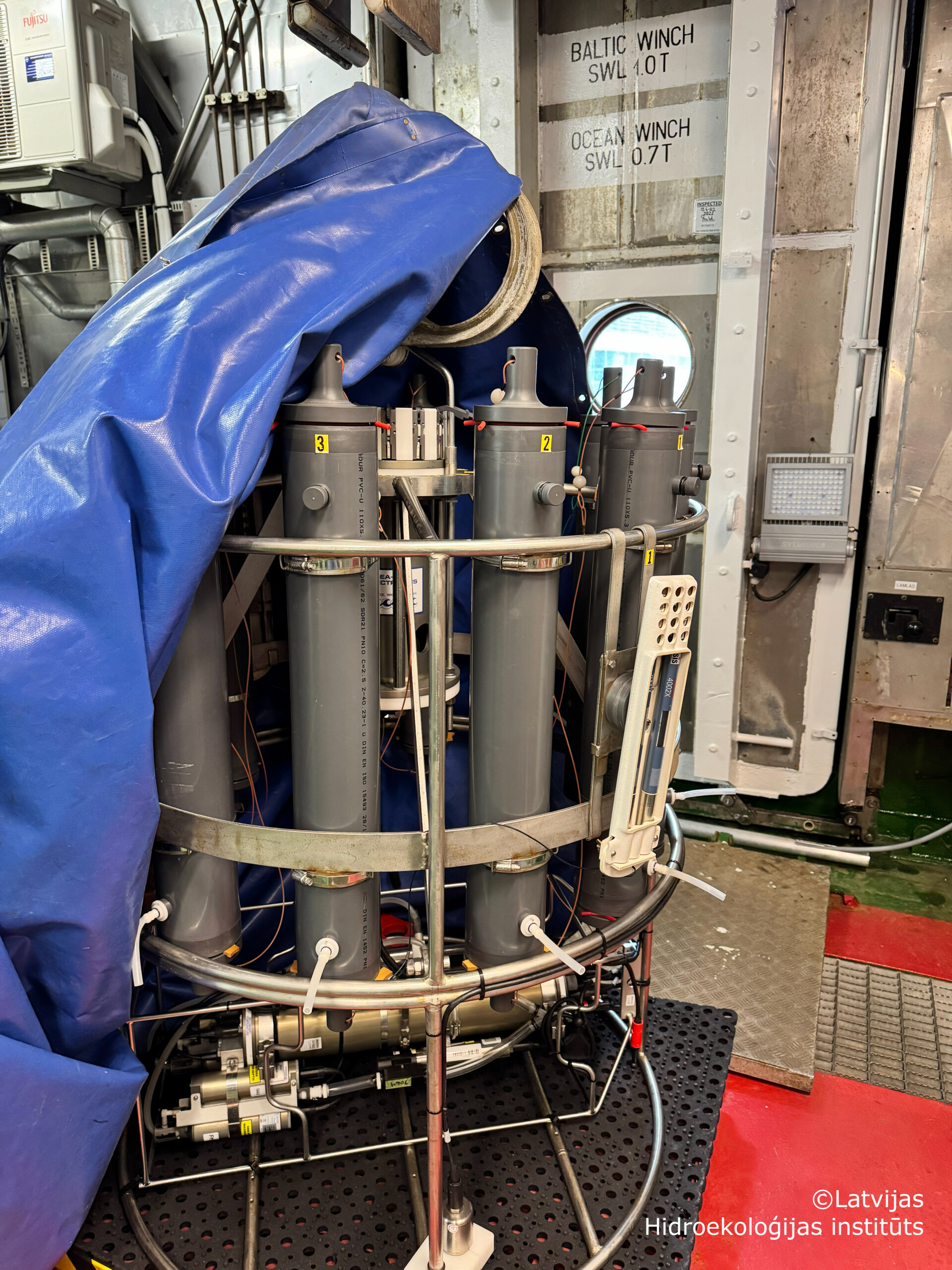
Sampling will take place at 17 sites in the Baltic Sea, to collect sediment cores, CTD profiles, and water samples for nutrients, plankton, and environmental DNA. The foreseen outputs include open-access datasets, methodological protocols, and at least 3 publications, alongside outreach through film, photography, and public engagement.
The research supports HELCOM and EU Mission Ocean objectives, informs regional management, provides empirical foundations for ecosystem-based governance, and contributes to societal awareness of marine pollution and climate-driven change in the Baltic Sea.
MORE INFORMATION
AQUARIUS TA Project Name:
The study of living archives and ecosystem memory in the Baltic Sea
Project acronym:
MemoBaltic
TA Project Unique ID:
50
Partners involved:
• Latvian Institute of Aquatic Ecology
• Scientific Institute of Food Safety, Animal Health and Environment “BIOR”
• University of Turku
• Tallinn University of Technology
• Technical University of Ostrava
• University of Latvia
Start date
04 May 2026
End date
15 May 2026
Mission Lighthouse Region
Baltic & North Sea
Work/research geographical
area
The research area is the Baltic Sea: Eastern Gotland basin/Eastern Baltic proper, Irbe Strait and the Gulf of Riga
Names of RI facilities used
RV Aranda
Scientific discipline(s)
Earth Sciences & Environment: Marine science/Oceanography
Principal Investigator
(PI) Affiliation
Dr. Anda Ikauniece
Latvian Institute of Aquatic Ecology
Relevant links
While the project does not have a dedicated webpage, project progress updates will be posted during the research cruise via the social media accounts of the main participating institutes.