
AQUARIUS Funding Call – Marine and Freshwater Infrastructure Access: Open 02 September 2025 – 28 October 2025
AQUARIUS Funding Call – Marine and Freshwater Infrastructure Access: Open 02 September 2025 – 28 October 2025


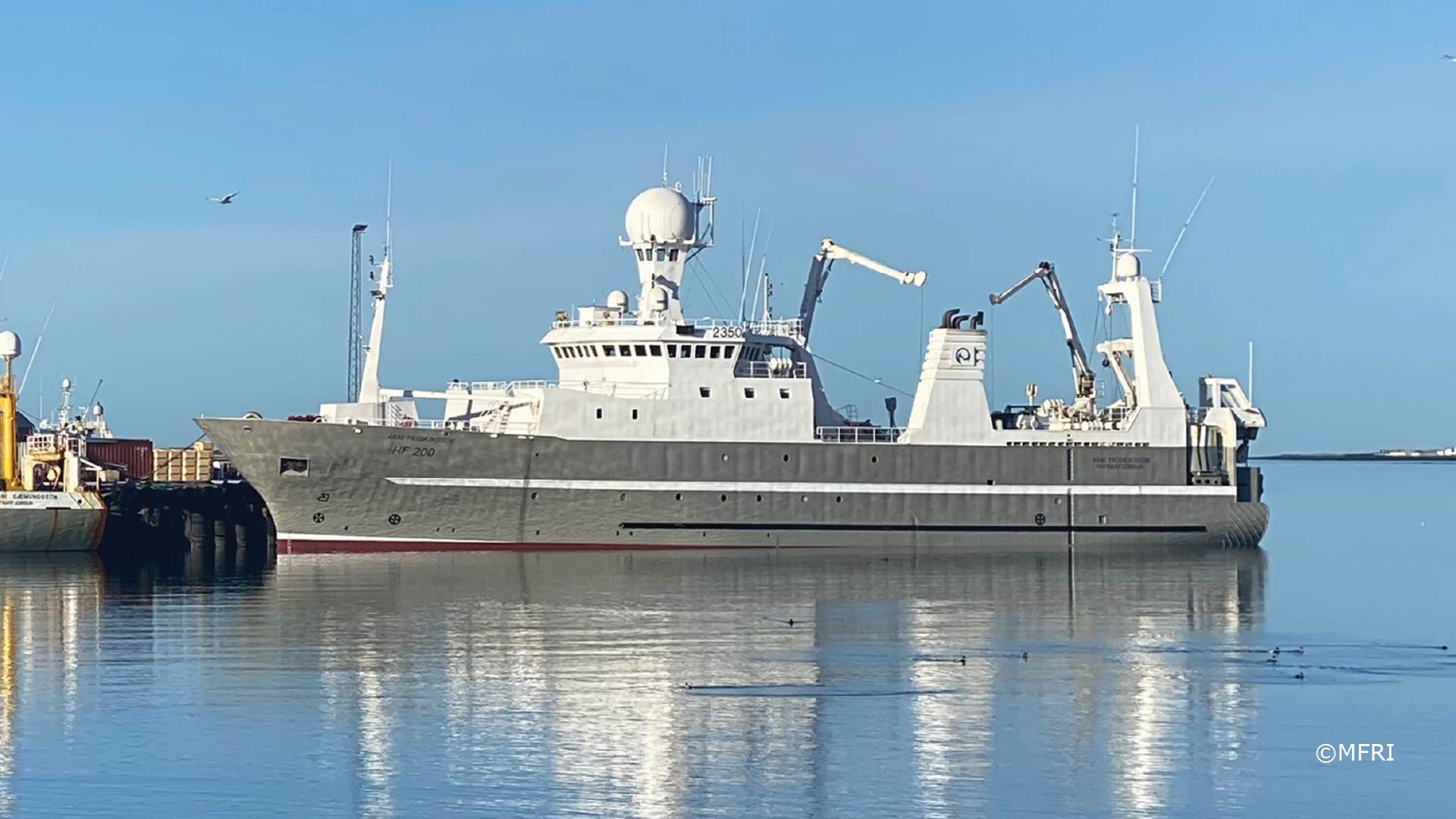

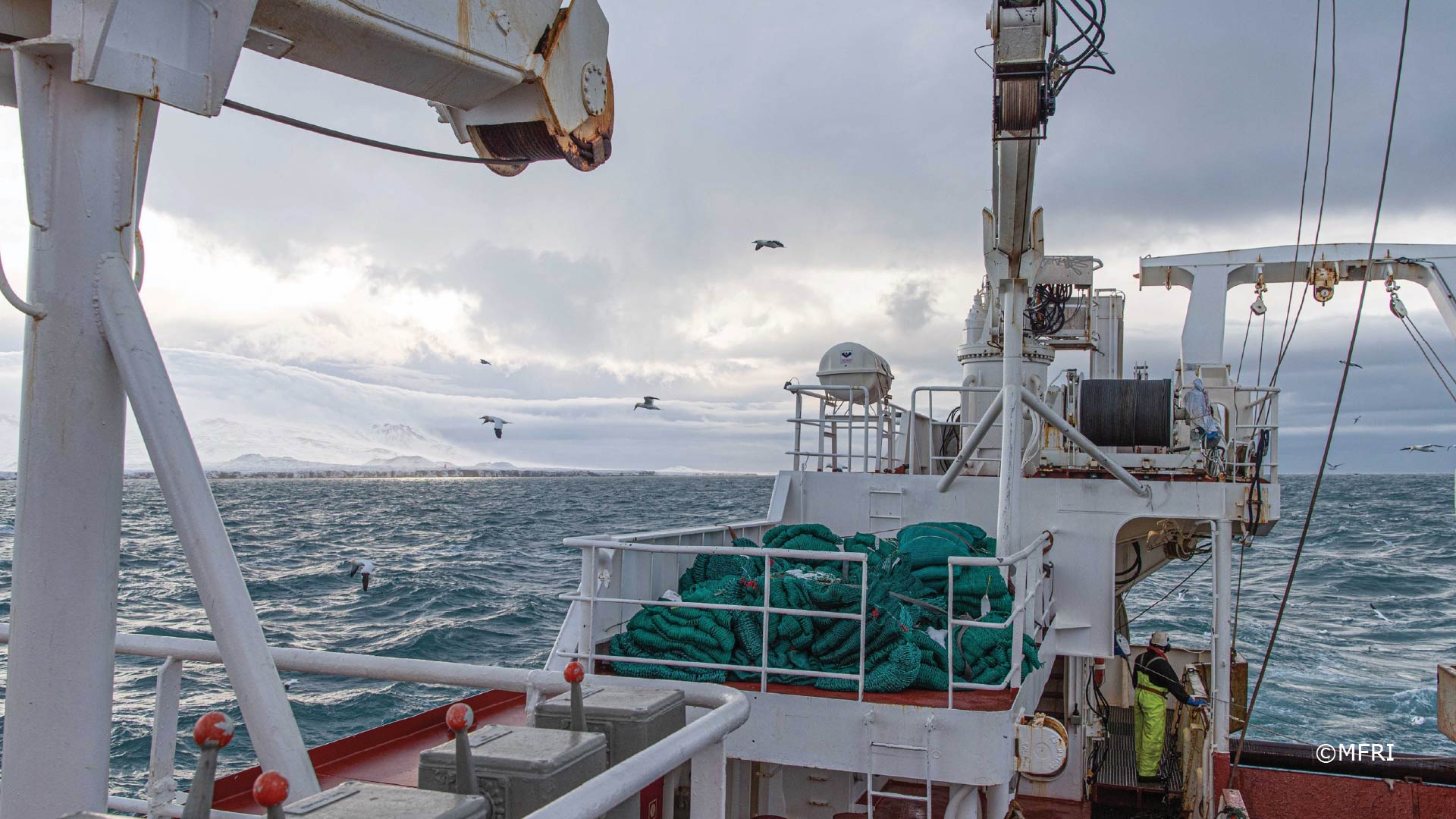
Research Infrastructure Used: RV Arni Fridriksson
“Mesoscale eddies have the potential to significantly influence the structure and transport of boundary currents like the East Greenland Current, as well as sea ice coverage. However, their roles in this region, particularly between Denmark Strait and Fram Strait, remain insufficiently understood. During the multidisciplinary E(ddies)GC cruise, we will investigate how these eddies might affect sea ice and the currents’ transport of volume, heat, and salt, along with their impacts on biogeochemical and carbon cycles through eddy-current interactions. We will also study how these eddies trap, carry, and transfer microplastics within the currents’ domains, and how these interactions influence microplastic distribution at larger scale. Satellite data and model outputs will guide an adaptive sampling strategy for the cruise, which will count on state-of-the-art sensors and extended deployments of autonomous gliders. The observations we collect will then feed back into model evaluation and improvement, targeting enhanced model performance. This integrated approach will deepen our understanding of Arctic boundary currents and their connections to the broader climate system, helping to improve both short-term forecasts and long-term predictions. We are very grateful for the support of the Aquarius Consortium, the Marine and Freshwater Research Institute, and the crew of the research vessel Pórunn Pórðardóttir, without whom this work would not be possible.”
Flanders Marine Institute

The E(ddies)GC project studies how mesoscale eddies impact the East Greenland Current (EGC) between Denmark Strait and Fram Strait, a region of critical importance for the climate that remains understudied. It focuses on the physical, biogeochemical, and ecological effects of eddies, including changes to current structure, volume transport, heat and salt fluxes, energy dissipation, nutrient cycling, the carbonate system, greenhouse gas exchange, and microplastic transport. The research combines a pre-study using satellite data and model outputs with in situ ship- and glider-based observations. The resulting integrated dataset will be analyzed collaboratively to enhance understanding of climate-relevant processes and improve climate model parameterization, supporting Arctic environmental monitoring and prediction.
MORE INFORMATION
AQUARIUS TA Project Name:
Multifaceted Impacts of Eddy Activity on the East Greenland Current System
Project acronym:
E(ddies)GC
TA Project Unique ID:
30
Partners involved:
• Flanders Marine Institute (VLIZ)
• Technical University of Denmark (DTU)
• Université Catholique de Louvain (UCLouvain)
• University of Naples Federico II
• Parthenope University of Naples
• Danish Meteorological Institute (DMI)
Start date
TBC
End date
TBC
Mission Lighthouse Region
Atlantic-Arctic
Work/research geographical
area
The cruise will take place in the domain of the East Greenland Current (EGC), off the eastern coast of Greenland, north of the Denmark Strait, between 71°N and 75°N. As the cruise aims to capture the interaction between the EGC and westward-propagating eddies, exact sampling locations will be defined through a fit-to-purpose, adaptive sampling strategy, which will be refined as the cruise approaches. Innovative aspects of the E(ddies)GC observational effort include a detailed pre-assessment of the eddy field and sea ice cover within the study area, combined with this flexible cruise plan. The strategy will be supported by satellite observations, ocean forecast systems, and high-resolution model outputs tailored to the region.
Names of RI facilities used
RV Þórunn Þórðardóttir
Scientific discipline(s)
Earth Sciences & Environment: Marine science/Oceanography
Principal Investigator
(PI) Affiliation
Flanders Marine Institute (VLIZ)


