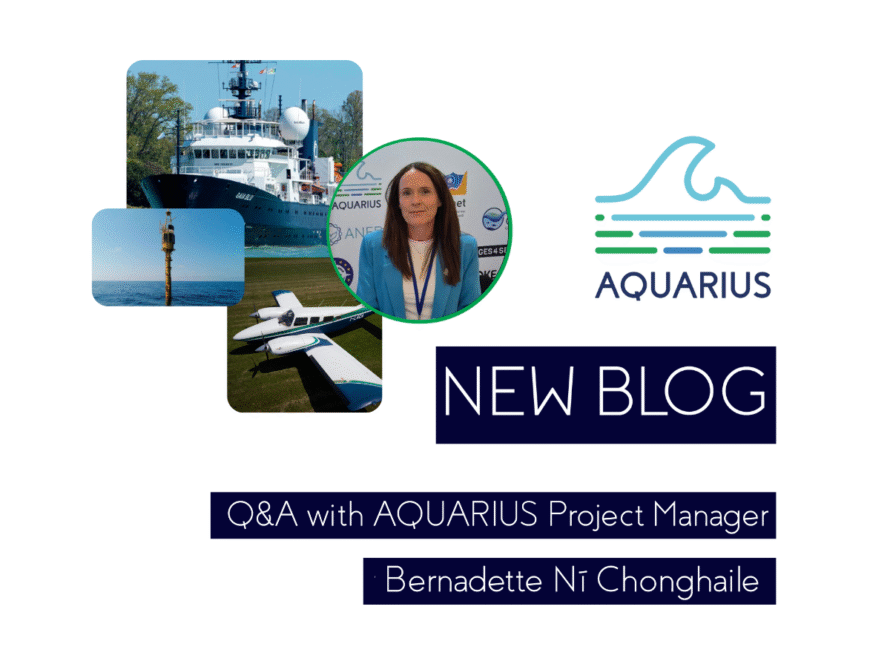
Two years into the AQUARIUS project, we spoke with Project Coordinator Aodhán Fitzgerald to discuss how the project is evolving, what makes it unique, and what comes next as the AQUARIUS-funded projects prepare to launch their research activities across Europe.
For those new to AQUARIUS, can you tell us who you are and about your role in the project?
I am Aodhán Fitzgerald, and I am the Research Vessel Operations Manager here in the Marine Institute of Ireland and the coordinator of the AQUARIUS project.
What exactly is Transnational Access and why is it important?

Transnational access is where scientists can apply to use research infrastructure on a pan-European basis. They can apply for any of the 57 items of infrastructure in the AQUARIUS Catalogue, and it means they can access a suite of varied and high-quality facilities for marine and freshwater research from drones to research vessels and everything in between.
The most exciting part of the AQUARIUS project is bringing together all these varied infrastructures for the first time. For example, it creates the opportunity for scientists to do integrated projects which bring together aircraft, autonomous surface vessels, gliders, satellite data and put those together to meet some of the challenges they are researching.
How did the scientific community respond to the opportunity to access AQUARIUS infrastructures?
We have had a fantastic response to the two funding Calls. Some of the projects put together lots of different types of infrastructure, across different sea basins. We have seen strong interest from the Atlantic and the Arctic, and also good responses from the Baltic, the Mediterranean and the Black Sea.

Why is it important to integrate freshwater and marine systems?
It is a unique opportunity to look at everything all the way down through the hydrosphere, from the river basins to the coast and into the marine environment.
This is in keeping with the goals of the Mission: Restore our Ocean and Waters, which takes a systems approach. It will allow scientists to research both the freshwater and marine ecosystems throughout Europe, and to address the many challenges that have been highlighted within the Mission Ocean programme.
Now that the calls are closed, what happens next for AQUARIUS?
What comes next for AQUARIUS is the full implementation of its transnational activities. We now have a set of proposals that will become research projects running between 2026 and 2028. Ten projects from the first call have already been scheduled. Some have completed data collection, while others are preparing to begin in the coming years. More information is available here.

AQUARIUS also focuses on training. What opportunities are there for early career researchers?
AQUARIUS offers a lot of exciting opportunities for early career researchers. We are encouraging applicants for transnational access to include berths for younger scientists, and we will be running a lot of training programmes, including floating universities and summer schools.
I would say to early career researchers to keep an eye on our website and our social media for the opportunities that will come up with AQUARIUS.
Check out the AQUARIUS Training Opportunities here.

Finally, what do you see as the legacy of AQUARIUS?
The legacy of AQUARIUS will be an understanding of how to integrate research infrastructures across domains and how to make these useful for scientists. Maybe it will open scientists’ eyes to how having this broad suite of infrastructure can support them in their research and will pave the way for other projects of this type in Europe going forward.
It is a very exciting project to coordinate with so many partners from so many different countries, with lots of big challenges but very exciting challenges ahead.